The Importance of Dental Care in Diabetic Patients
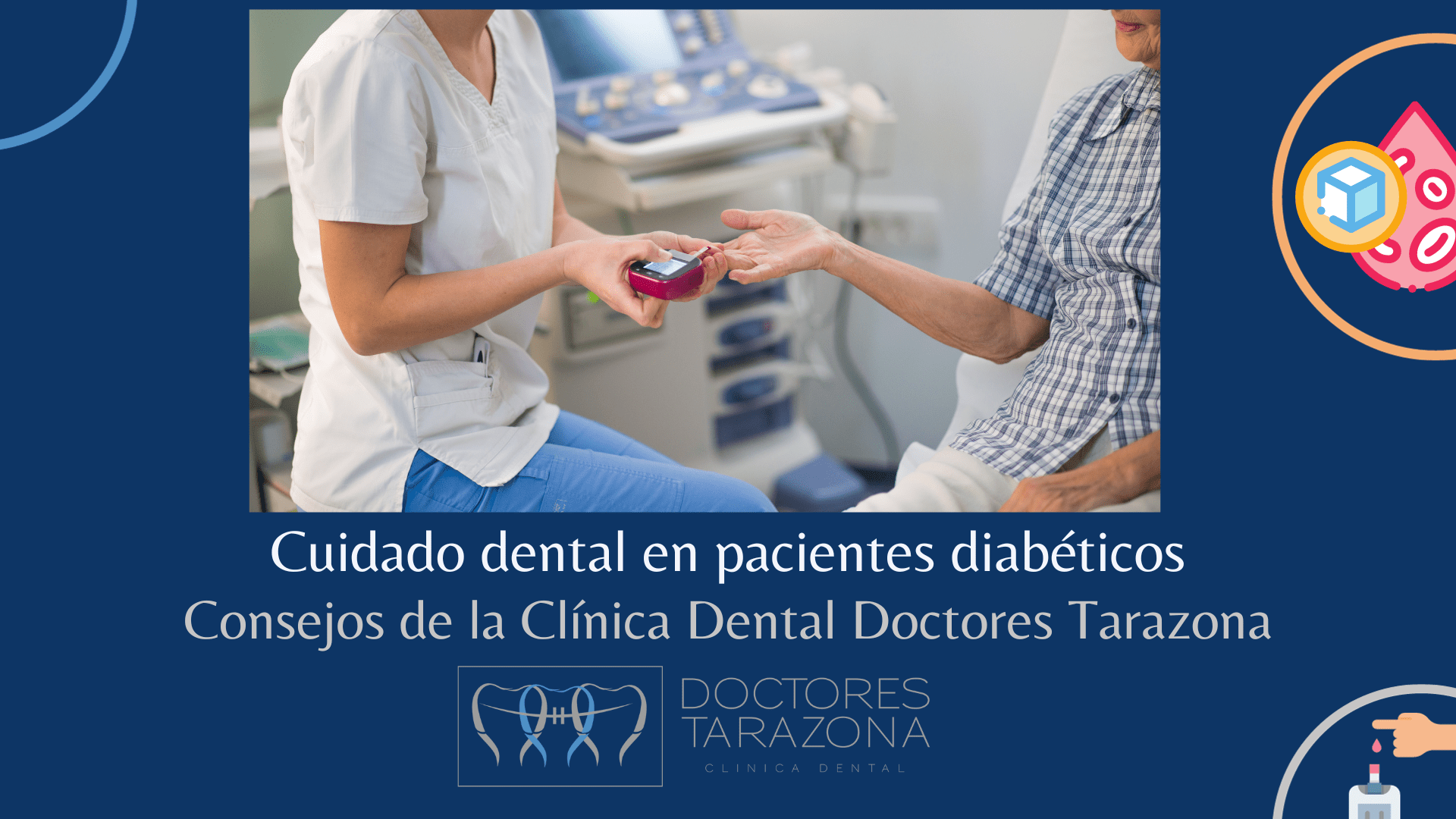
Diabetes is a chronic disease that affects more than 6 million people in Spain, so dental care in diabetic patients is a matter of great importance in our society, as it affects a significant part of the population. Diabetes is characterised by an increase in the levels of glucose (sugar) in the blood due to a deficiency of or resistance to insulin, the hormone that regulates the metabolism of carbohydrates. Diabetes can have serious consequences for health, such as cardiovascular, kidney, nerve and eye problems. But, did you know that diabetes can also affect your oral health? In this post we tell you how diabetes and oral health are related and why dental care is crucial for diabetic patients.
The relationship between diabetes and oral health: why dental care is crucial for diabetic patients
Diabetes and oral health are intimately related, as they both influence each other. On the one hand, diabetes can cause an alteration of the salivary flow, a decrease in the defences and a greater susceptibility to infections. All this favours the development of oral problems such as cavities, gingivitis, periodontitis, oral thrush, xerostomia (dry mouth) and burning mouth syndrome. These problems can affect the quality of life of diabetic patients, making their eating, their speech and their self-esteem difficult.
On the other hand, oral problems can affect the control of diabetes, as they can alter the glycaemic balance and increase the risk of systemic complications. For example, periodontitis, which is an inflammation and infection of the tissues that hold the teeth in place, can cause a release of inflammatory substances that interfere with the action of insulin and increase the resistance to this hormone. In addition, oral infections may require treatment with antibiotics that can interfere with the effect of antidiabetic medications.
For all these reasons, dental care is crucial for diabetic patients, as it can help to prevent and treat oral problems, improve the control of blood sugar and reduce the risk of complications associated with diabetes.
How to control diabetes through proper oral care: practical tips for diabetic patients
To control diabetes through proper oral care, it’s important to follow a series of practical tips that will help you maintain good oral hygiene and health. These are some of them:
- Brush your teeth at least twice a day with a fluoride toothpaste and use dental floss or interdental brushes to clean the spaces between the teeth.
- Use an alcohol-free antiseptic mouthwash to rinse your mouth after brushing and avoid the growth of bacteria.
- Hydrate your mouth frequently by drinking water or chewing sugar-free gum to combat dry mouth.
- Avoid the consumption of tobacco, alcohol and sugary or acidic foods that can damage your teeth and gums.
- Control your blood sugar level regularly and follow your doctor’s instructions about your diet and your antidiabetic medication.
- Visit the dentist at least twice a year to have periodic check-ups and detect and treat any oral problem in time.
>> This post may interest you: ” The impact of diet on dental health” <<
The impact of diabetes on oral health: prevention and treatment of related oral problems
As we’ve seen, diabetes can have a negative impact on oral health, favouring the development of oral problems such as:
- Cavities: caused by the demineralisation of the tooth enamel due to the attack of the bacteria that feed on food debris. Cavities can cause pain, sensitivity and infections. To prevent them, it’s important to maintain good oral hygiene and avoid the consumption of sugary foods. To treat them, it’s necessary to go to the dentist so they can remove the affected part of the tooth and restore it with a filling or a crown.
- Gingivitis: caused by the inflammation of the gums due to the build-up of plaque. Gingivitis can cause bleeding, redness and pain of the gums. To prevent it, it’s important to clean the teeth and gums well with the brush, dental floss and mouthwash. To treat it, it’s necessary to go to the dentist for a professional cleaning to remove the tartar that forms from the hardening of the plaque.
- Periodontitis: caused by the infection and inflammation of the tissues that hold the teeth in place, caused by the progression of gingivitis. Periodontitis can cause receding gums, bone loss and the mobility or loss of the teeth. To prevent it, it’s important to control gingivitis and go to the dentist regularly. To treat it, it’s necessary to go to the dentist for scaling and root planing to remove the bacteria and the infected tissue and, in some cases, periodontal surgery to regenerate the lost bone and tissue.
- Oral thrush: caused by the excessive growth of the Candida albicans fungus in the mouth due to an alteration of the balance of the oral flora. Oral thrush can cause white or red patches on the tongue, the palate or the cheeks, as well as pain, burning or difficulty swallowing. To prevent it, it’s important to maintain good oral hygiene and hydration and avoid the prolonged use of dentures or inhalers. To treat it, it’s necessary to go to the doctor so they can prescribe an oral or topical antifungal.
- Xerostomia: caused by a decrease or absence of saliva in the mouth as a result of an alteration of the salivary glands. Xerostomia can cause dryness, burning or cracks in the mouth, as well as difficulty speaking, chewing or swallowing. To prevent it, it’s important to drink water frequently, chew sugar-free gum or use artificial saliva sprays or gels. To treat it, it’s necessary to go to the doctor so they can determine the cause and the right treatment.
- Burning mouth syndrome: caused by a sensation of burning in the mouth without an apparent cause. Burning mouth syndrome can cause pain, tingling or an alteration of taste on the tongue, the palate or the gums. To prevent it, it’s important to avoid the consumption of spicy, acidic or alcoholic foods and maintain good oral hygiene and hydration. To treat it, it’s necessary to go to the doctor so they can rule out other possible causes and prescribe a symptomatic treatment.
The connection between periodontal disease and diabetes: how proper dental care can help to control the disease
Periodontal disease and diabetes are two chronic diseases that are closely related, as they influence each other. On the one hand, diabetes can increase the risk of developing periodontal disease by altering the immune system and favouring the inflammation and infection of the tissues that hold the teeth in place. On the other hand, periodontal disease can affect the control of diabetes by causing a release of inflammatory substances that interfere with the action of insulin and increase the resistance to this hormone.
Therefore, proper dental care can help to control both periodontal disease and diabetes by preventing and treating oral infections, reducing systemic inflammation and improving the glycaemic balance. Some studies have shown that periodontal treatment can lower the levels of glycated haemoglobin (HbA1c) in diabetic patients, which indicates an improvement in blood sugar control. For example, a meta-analysis of 10 randomised clinical trials found that non-surgical periodontal treatment reduced HbA1c by 0.36% after 3-4 months compared to the control group. Another 6-month study with 264 type 2 diabetic patients showed that periodontal treatment combined with antibiotics reduced HbA1c by 0.51% compared to the placebo group. These results suggest that periodontal treatment can have a beneficial effect on the control of diabetes and, therefore, on the prevention of its complications.
Important considerations for diabetic patients at the dental practice: what you should know before your visit
If you’re a diabetic patient, it’s important that you bear in mind some important considerations before visiting the dentist. These are some of them:
- Inform the dentist about your diabetic condition, the type and the duration of the diabetes, the blood sugar level, the medication you take and any complications you may have had.
- Schedule your appointment for the time of day when your sugar level is most stable and avoid prolonged fasting or large meals before or after the visit.
- Take with you your glucose meter, your antidiabetic medication and some food or drink with sugar in case you suffer hypoglycaemia during or after the dental treatment.
- Follow the dentist’s instructions about the post-operative care and the medication you should take, especially if it’s antibiotics or painkillers that can affect your sugar level.
- Go to the dentist regularly to have periodic check-ups and prevent or treat any oral problem in time.
The benefits of teamwork: the importance of collaboration between the dentist and the doctor in the dental care of diabetic patients
The dental care of diabetic patients requires teamwork between the dentist and the doctor, as both professionals must coordinate to offer comprehensive and personalised treatment. The benefits of teamwork are:
- The dentist can inform the doctor about the patient’s oral state, the possible infections or inflammations they may have and the dental treatment they’ve carried out or are going to carry out.
- The doctor can inform the dentist about the type and the progress of the patient’s diabetes, the blood sugar level, the medication they take and any complications they’ve had or may have.
- The dentist and the doctor can adjust the dental treatment and the antidiabetic treatment according to the needs and conditions of the patient, thereby avoiding possible interactions or adverse effects.
- The dentist and the doctor can educate the patient about the importance of dental care and the control of diabetes, offering them practical tips and motivating them to follow a healthy lifestyle.
A real case: Juan, a diabetic patient who got his smile back thanks to proper dental care
Juan has been a type 2 diabetic patient for 10 years. A few months ago he started to notice that his gums bled when he brushed his teeth, that his teeth were moving and that he had bad breath. In addition, his blood sugar level was out of control and his doctor warned him that he could have cardiovascular complications if he didn’t improve his situation.
Juan, a patient for years at the Clínica Dental Doctores Tarazona in Valencia, booked an appointment for an oral check-up. In the consultation we were able to diagnose advanced periodontitis, an infection and inflammation of the tissues that hold the teeth in place. The dentist, Dr José Pérez, explained that periodontitis was a frequent complication in diabetic patients and that it could affect his control of diabetes and his general health.
The doctor proposed a treatment plan that consisted of:
- A professional cleaning to remove the tartar and the bacteria that were causing the infection.
- Scaling and root planing to clean the roots of the teeth and remove the infected tissue.
- Periodontal surgery to regenerate the lost bone and tissue and fix the teeth with bone grafts and resorbable membranes.
- A fixed denture on implants to replace the lost teeth and restore the function and the aesthetics of the mouth.
- This may interest you: Why is professional dental cleaning important?
The dentist got in touch with Juan’s doctor to inform him about the dental treatment that was going to be carried out at the clinic by Dr José Pérez and Dr Pablo Tarazona, to adjust the antidiabetic treatment according to Juan’s needs. The doctor recommended that Juan control his blood sugar level before and after each dental session and that he take his antidiabetic medication as instructed.
Juan followed the dental treatment for several months, going to the dental clinic regularly and following the dentists’ instructions about the post-operative care and the oral hygiene. He also followed the doctor’s advice about the control of diabetes, keeping a balanced diet and doing moderate exercise.
“Thanks to proper dental care and the teamwork between our dentists and the doctor, Juan managed to improve his oral health and his general health”.
His blood sugar level stabilised, his risk of cardiovascular complications was reduced and his quality of life improved. In addition, he got his smile and his self-confidence back.
Conclusion: the importance of dental care in diabetic patients
As we’ve seen, dental care is very important for diabetic patients, as it can help them to prevent and treat the oral problems related to diabetes, improve the control of blood sugar and reduce the risk of systemic complications. That’s why it’s essential that diabetic patients maintain good oral hygiene and health, visit the dentist regularly and follow their doctor’s instructions about their antidiabetic treatment.
If you’re a diabetic patient and want to improve your oral health and your general health, don’t hesitate to contact the Clínica Dental Doctores Tarazona in Valencia.
We’re a dental clinic specialising in the treatment of diabetic patients, with a team of qualified and experienced professionals who’ll offer you a personalised and quality service. In addition, we have the latest technology and the best materials to guarantee your satisfaction and your well-being.
Don’t wait any longer and book your appointment today. We’ll be delighted to look after you and help you get your smile back. We’re waiting for you! 😊