How to Look After Your Teeth After a Tooth Extraction
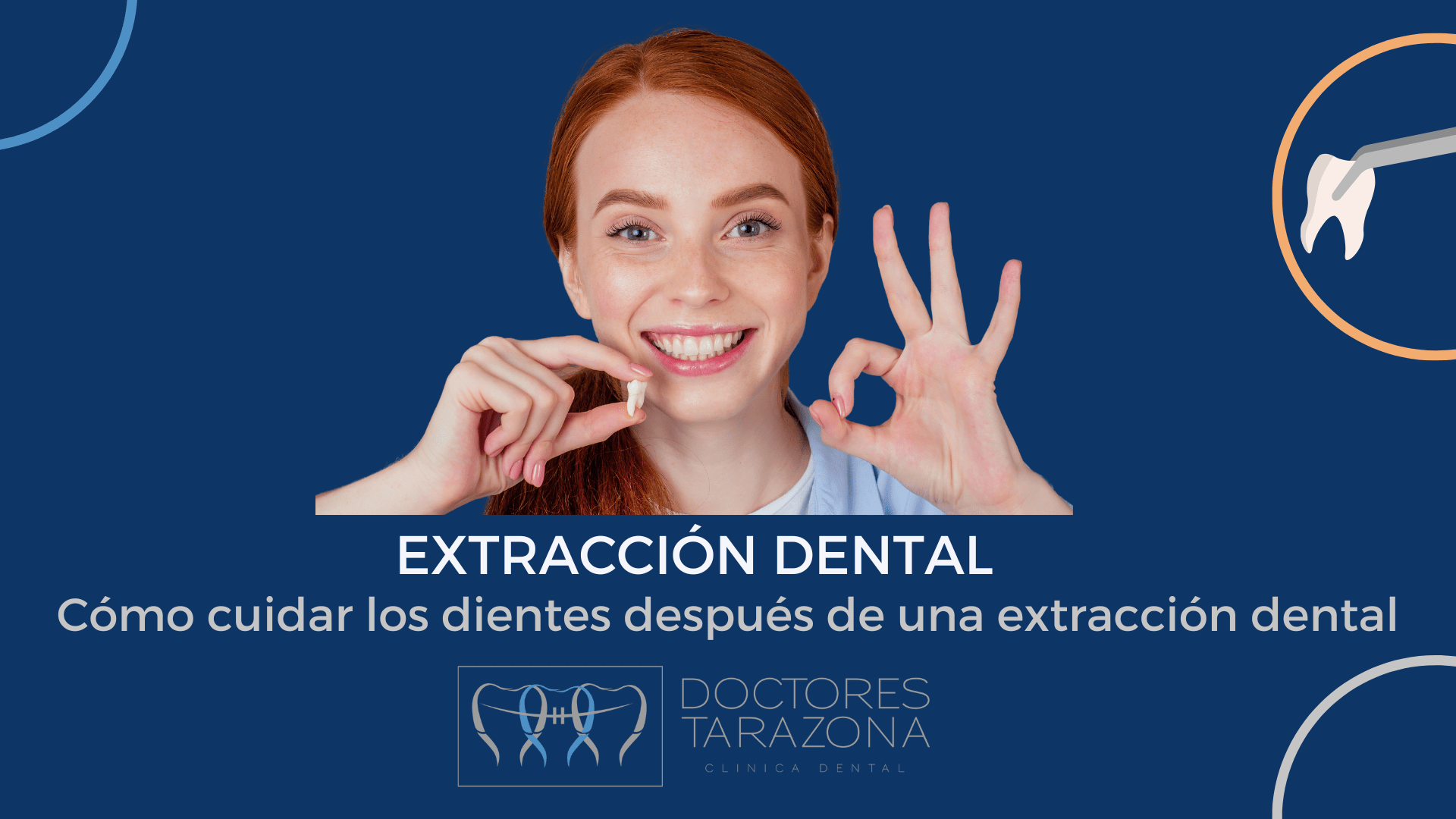
It’s very important that your dentist tells you everything you might need to know about how to look after your teeth after a tooth extraction. Maybe it’s your case and the extraction is coming up, or have you recently had a tooth extracted and don’t know how to look after your mouth? If the answer is yes, this article is for you. We’re going to tell you the story of Luis, one of our patients who had to undergo a tooth extraction because of a wisdom tooth problem. In addition, we’re going to give you some practical tips so you know what to do and what to avoid after a tooth extraction.
Aftercare following a tooth extraction: what to do and what to avoid
Luis is 25 years old and got to know our clinic because a patient of ours who is a friend of his recommended it. He’d never had dental problems. He brushed his teeth three times a day, used dental floss and even used mouthwash. However, one day he started to feel an intense pain at the back of the jaw. When he came to the practice we found that his wisdom teeth were coming through, but that they didn’t have enough space to come out properly.
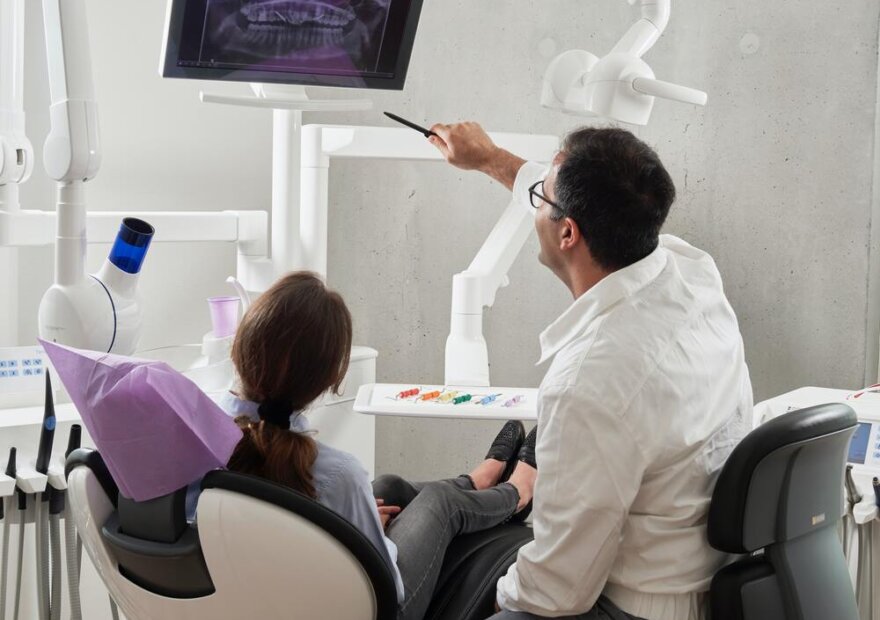
We examined his mouth and took some X-rays and Dr Tarazona explained that he had impacted wisdom teeth, that is, they were trapped in the bone or in the gum and couldn’t erupt. He explained that this could cause him infections, inflammations, cavities or damage to the adjacent teeth. He recommended that he have them extracted as soon as possible to avoid complications.
Luis accepted the treatment and Dr Tarazona scheduled an appointment for the extraction. He explained how the whole process was going to go: that he was going to apply local anaesthetic so that he wouldn’t feel pain, and that then he was going to make some incisions in the gum to access the teeth and extract them with forceps. He assured him that it was going to be a simple and safe procedure, and that his recovery was going to be quick.
Our specialist also gave him some instructions to look after his mouth after the extraction. He told him that he should:
- Bite on a sterile gauze for about 30 minutes to stop the bleeding.
- Apply ice to the cheek for 15 minutes every hour to reduce the inflammation.
- Take the prescribed medication to relieve the pain and prevent infections.
- Not smoke, drink alcohol or use straws for at least 24 hours after the extraction.
- Not rinse the mouth or spit during the first 24 hours after the extraction.
- Not brush the teeth or use dental floss in the extraction area during the first 24 hours after the extraction.
Diet after a tooth extraction: recommended foods and ones to avoid
Our patient followed the doctor’s instructions and went home to rest. At first, his mouth was numb from the anaesthetic, but then he started to feel a little pain and swelling. He took a painkiller and put ice on his face. He was also hungry, but he didn’t know what he could eat without damaging his mouth.
Dr Tarazona told him to follow a soft and cold diet during the first few days after the extraction. He’d given him a list of recommended foods and ones to avoid.
- Among the recommended foods were:
- Yoghurt, ice cream, milkshakes or smoothies without seeds or chunks.
- Mashed potato, soup, broth or vegetable cream.
- Fresh cheese, cottage cheese or tofu.
- Scrambled eggs, omelette or quiche.
- Boiled, steamed or baked fish.
- Shredded chicken or chicken in sauce.
- Cooked rice, pasta or cereals.
- Among the foods to avoid were:
- Hard, crunchy or fibrous foods, such as nuts, popcorn, biscuits or toast.
- Hot, spicy or acidic foods, such as coffee, tea, chocolate, tomato sauce or lemon.
- Foods with seeds or small chunks, such as strawberries, kiwi, granola or wholemeal bread.
- Foods that require a lot of chewing, such as red meat, raw vegetables or whole fruit.
As Luis told us at his later check-up: after the extraction he made a banana and milk milkshake and drank it carefully, without using a straw. Then he ate a natural yoghurt and felt better. He realised that he could eat well without suffering.
How to relieve the pain and inflammation after a tooth extraction
Luis spent the first day at home, following a soft and cold diet and taking the medication prescribed by the doctor. The next day, he got up with less pain and swelling, but he still had some discomfort.
The dentist had told him that the pain and the inflammation were normal after a tooth extraction, and that they would decrease over time. He’d given him some tips to relieve them. He’d told him that he could:
- Keep applying ice to the cheek during the first two or three days after the extraction.
- Take the painkillers and the antibiotics as instructed.
- Rinse the mouth with warm water and salt after each meal and before going to bed, from the second day after the extraction.
- Sleep with the head raised to make the drainage easier and reduce the pressure on the extraction area.
- Avoid physical effort or activities that could increase the bleeding or the inflammation.
Luis followed the dentist’s advice and rinsed his mouth with warm water and salt. Then he took a painkiller and went to bed with an extra pillow. He relaxed and fell asleep… everything went as expected and as Dr Tarazona had explained to him.
The importance of maintaining good oral hygiene after a tooth extraction
Our patient, Luis, came back to the clinic seven days after the extraction so the doctor could check the wound and remove the stitches. The dentist told him that everything was fine and that his mouth was healing properly. He congratulated him for having followed his instructions and encouraged him to keep looking after his oral hygiene.
The doctor explained that maintaining good oral hygiene after a tooth extraction was very important to prevent infections and favour the healing. He told him that he should:
- Brush the teeth twice a day with a fluoride toothpaste, using a soft brush and avoiding the extraction area until it was completely healed.
- Use dental floss once a day to clean between the teeth, avoiding the extraction area until it was completely healed.
- Use an antiseptic mouthwash to remove the bacteria and protect the wound, following the dentist’s instructions.
- Visit the dentist regularly for check-ups and professional cleanings.
Common complications after a tooth extraction and how to prevent them
Luis went home happy and satisfied with the result of his tooth extraction. He hadn’t had any problem or complication, and his mouth was almost recovered. However, he was aware that not all cases were as easy as his, and that some people could have difficulties after a tooth extraction.
The dentist had warned him about some common complications after a tooth extraction, and had told him how to prevent or treat them. Among these complications were:
- Dry socket or socket infection (alveolitis): it’s an inflammation and infection of the gap left by the extracted tooth. It happens when the blood clot that protects the wound moves or dissolves too soon, leaving the bone and the nerves exposed. The symptoms are intense pain, bad smell, bad taste and fever. To prevent it, you should avoid smoking, drinking alcohol or using straws for at least 24 hours after the extraction. To treat it, you should go to the dentist so they can clean the socket and apply a medication. You can also rinse the mouth with warm water and salt or with an antiseptic prescribed by the dentist.
- Haematoma or bruise: it’s a build-up of blood under the skin that causes a purple or black mark. It’s caused by the rupture of a blood vessel during the extraction. The symptoms are pain, swelling and a change of colour. To prevent it, you should apply ice to the area during the first two or three days after the extraction. To treat it, you should wait for it to be reabsorbed on its own, which can take between one and two weeks.
- Paraesthesia or numbness: it’s a temporary or permanent loss of sensitivity in the lips, the tongue or the chin. It’s caused by an injury to a nerve during the extraction. The symptoms are tingling, burning or a lack of sensation. To prevent it, you should choose an experienced and qualified dentist to carry out the extraction. To treat it, you should consult the dentist to assess the degree of damage and the possible solutions.
>>> This may interest you: Diseases of the mouth <<<
Luis listened carefully to the dentist and asked him some questions about the complications. The dentist answered him patiently and reassured him. He told him that the complications were rare and that they could be avoided or resolved easily. He advised him to keep looking after his mouth and to call him if he had any doubt or problem.
At our clinic we always prioritise the care and attention of our patients, which is why we like to explain the whole process in every treatment so that patients know what’s going to be done to them and what they can do to help the success of their treatments.
Do you have more doubts or need us to give you an assessment? Book an appointment now and don’t wait any longer to look after your oral health and show off a beautiful smile.
At Clínica Dental Doctores Tarazona:
“We Love Looking After Your Smile”