Dental Implants: All Your Doubts Resolved
Dental implants are a type of treatment within Dentistry that’s very much in demand at the moment. They’re an alternative that emerged a few years ago to be able to replace teeth we’ve lost.
What is a dental implant?
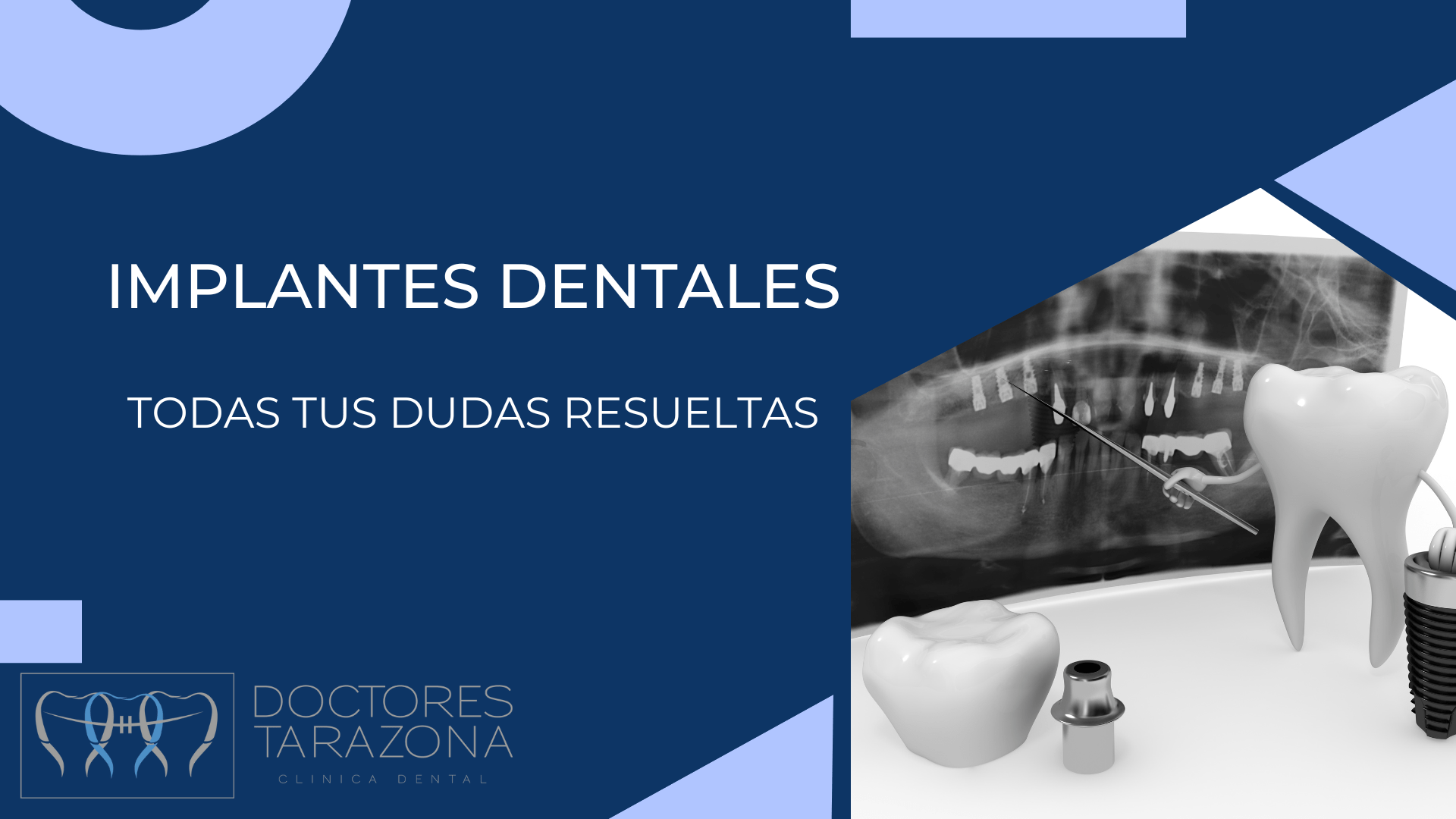
A dental implant is an artificial metal root, usually of titanium, that’s placed in the bone to hold the cap we’ll put on later and that will do the job of the tooth we’ve lost, offering us natural and lasting results for our whole life.
Dental implants: Types
According to the way they’re placed, implants can be:
- Two-stage dental implants: it’s the most common way of placing dental implants. First the implant is placed inside the bone and a period of time is left (3-6 months depending on the area), then the abutment and the crown are placed.
- Immediate-load dental implants: very much in fashion at the moment, they’re usually advertised to us as “implants in a day”. That means that on the same day they place the implant inside the bone and a cap (crown) on top. This can’t always be done, especially if there’s been a previous infection, there’s little bone or it’s implanted in areas where we chew hard.
Common questions from our patients about dental implants:
What is a dental implant like?
A dental implant is shaped like a screw and is what we’ll insert into the maxillary or mandibular dental bone. On top of the implant we’ll place the abutment, which is what joins the dental implant to the crown, and the crown, which is the tooth-shaped cap. In the event that we’ve lost more than one tooth, we can place a denture with more than one tooth on top of the implants.
What material are dental implants made of?
Classification of implants according to their material:
- Metal dental implants: most of them are made of titanium. Titanium is a biocompatible material, with our implant fusing to the bone so that it stays fixed for years. They’re the most common.
- Zirconium implants: They’re only used in patients allergic to the previous ones or in areas of high aesthetic demand. They’re white in colour and their fusion to the bone is done through a chemical bond.
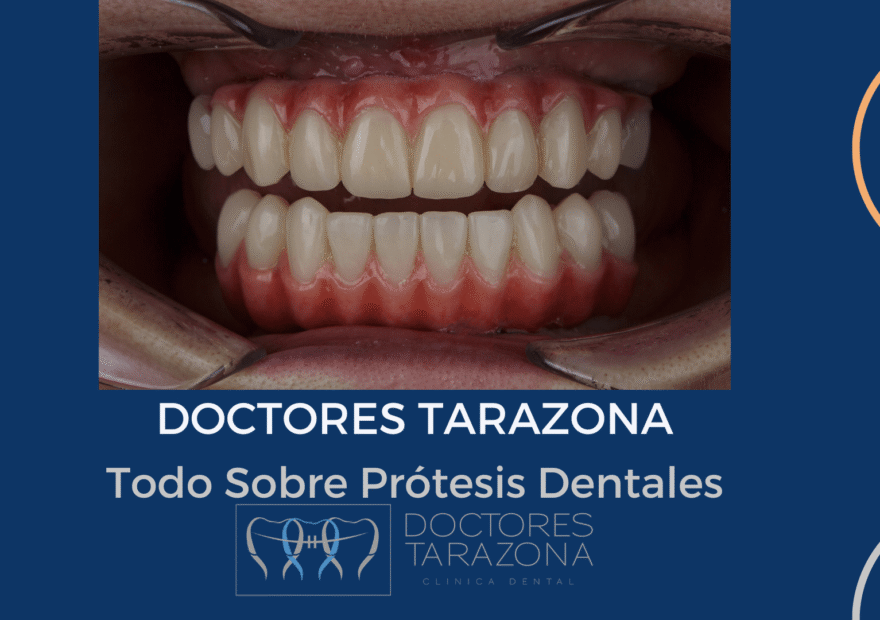
Regardless of the type of implant we have inside the bone, the crown or the denture they’ll place on top will be white, resembling the colour of the teeth.
How is a dental implant done step by step?
- Planning: Before the day of the surgery the doctor will have carried out the necessary radiological tests to plan its placement, in most cases a 3-dimensional X-ray called a CBCT that we can do at our clinic to quantify the place of insertion of the implant down to the millimetre and check that there’s bone in the area and no remains of any infection from the tooth we had before.
- Surgery: On the day of the surgery we’ll have to anaesthetise the area where we’re going to place the implant. Once it’s numb, the doctor will make an incision in the gum to be able to access the bone, where a hole will be made with a water-cooled drill where the implant will be placed. Once it’s placed, the gum is closed with stitches.
- Waiting time: we’ll need a few weeks to pass for the implant to integrate into the bone. When the doctor considers that an appropriate amount of time has passed, they’ll take an X-ray to check it.
- We’ll uncover the implant, lightly anaesthetising the area to be able to access the implant where we’ll put a healing abutment that will help the gum to gradually take the right shape around the implant. They’ll also take measurements.
- Placement of the definitive abutment, the crown or denture: they’ll take a scan or some measurements so that the laboratory can make our new tooth, choosing the desired colour. After the necessary laboratory tests, they’ll screw our new teeth to the implant or implants.
What is the placement of a dental implant like?
The way of placing the dental implant is as we’ve detailed above. It’s a simple and quick procedure that we carry out regularly at the dental clinic. If it’s just one implant, it takes almost the same time as doing a filling.
What are the benefits of dental implants?
The main advantages of dental implants are:
- They’re aesthetic and natural, they replace the teeth without anyone noticing.
- They’re strong and durable, we can eat with them as with a natural tooth.
- To place them there’s no need to damage the neighbouring teeth, as with bridges, where we would need to file them down.
- They help to keep the bone in the area. If we don’t place an implant where a tooth has been extracted, the bone will gradually be lost, which is why it’s important not to take too long between the extraction and the placement of the dental implant.
- They keep the position of the rest of the teeth. When a tooth is removed or falls out, the rest of the neighbouring teeth will want to move towards the gap that’s left, as well as the tooth above, which will try to come down until it even touches the gum below; that’s why it’s also advisable to replace the tooth as soon as possible, since if the rest of the neighbouring teeth move and then the dental implant doesn’t fit, an orthodontic treatment will be necessary to be able to put them back in their place.
- They’re 100% safe, they’re made with safe biocompatible materials and last almost a lifetime.
What are the risks of dental implants?
Dental implants are safe, their success rate is usually 90%; despite this, we’ll mention some risks we can have:
- Implant failure, that is, that it doesn’t osseointegrate into the bone and starts to move. This is frequent in smoking patients, as the bone doesn’t accept the implant and “rejects” it, which is why it’s advised to stop smoking for a while after the surgery.
- Post-operative discomfort after the surgery to place the dental implant, as with any surgery, for example when a tooth is removed; the area may become inflamed or the face may swell a little; to avoid it the doctor will advise us on the best medication that will help to reduce those sensations.
- Breakages of the denture. Once the tooth or teeth are placed on top of the dental implants, it may be that on some occasion they break or get stained, as can also happen with fillings when they’ve been in the mouth for a while. The solution is simple, we’ll take some measurements at the clinic to send it to the laboratory so they can fix it and in a short time they’ll put the denture back in the mouth.
This may interest you >> The importance of a proper dental cleaning.
Which people can’t or shouldn’t have dental implants?
All patients over 18 years of age are candidates for the placement of dental implants. As with any surgical procedure, the placement of dental implants shouldn’t be carried out on any patient with an uncontrolled systemic disease.
Those diabetic patients, or those who take anticoagulants or bisphosphonates, will have to take some special precautions and we’ll have to consult their doctor as to whether the procedure is possible.
How many years do dental implants last?
Dental implants can last almost a lifetime if they’re looked after well, unlike bridges, which have an average life of 10 years.
Once osseointegrated into the bone, the implant will stay fixed and won’t move, holding the crown for as long as necessary.
What happens if teeth are removed and there’s no subsequent placement of dental implants?
As we’ve mentioned above, when a tooth is removed or falls out, the rest of the neighbouring teeth will tend to move towards the gap that’s left, as well as the tooth above, which will try to come down until it even touches the gum below; that’s why it’s also advisable to replace the tooth as soon as possible, since, if the rest of the neighbouring teeth move and then the dental implant doesn’t fit, an orthodontic treatment will be necessary to be able to put them back in their place.