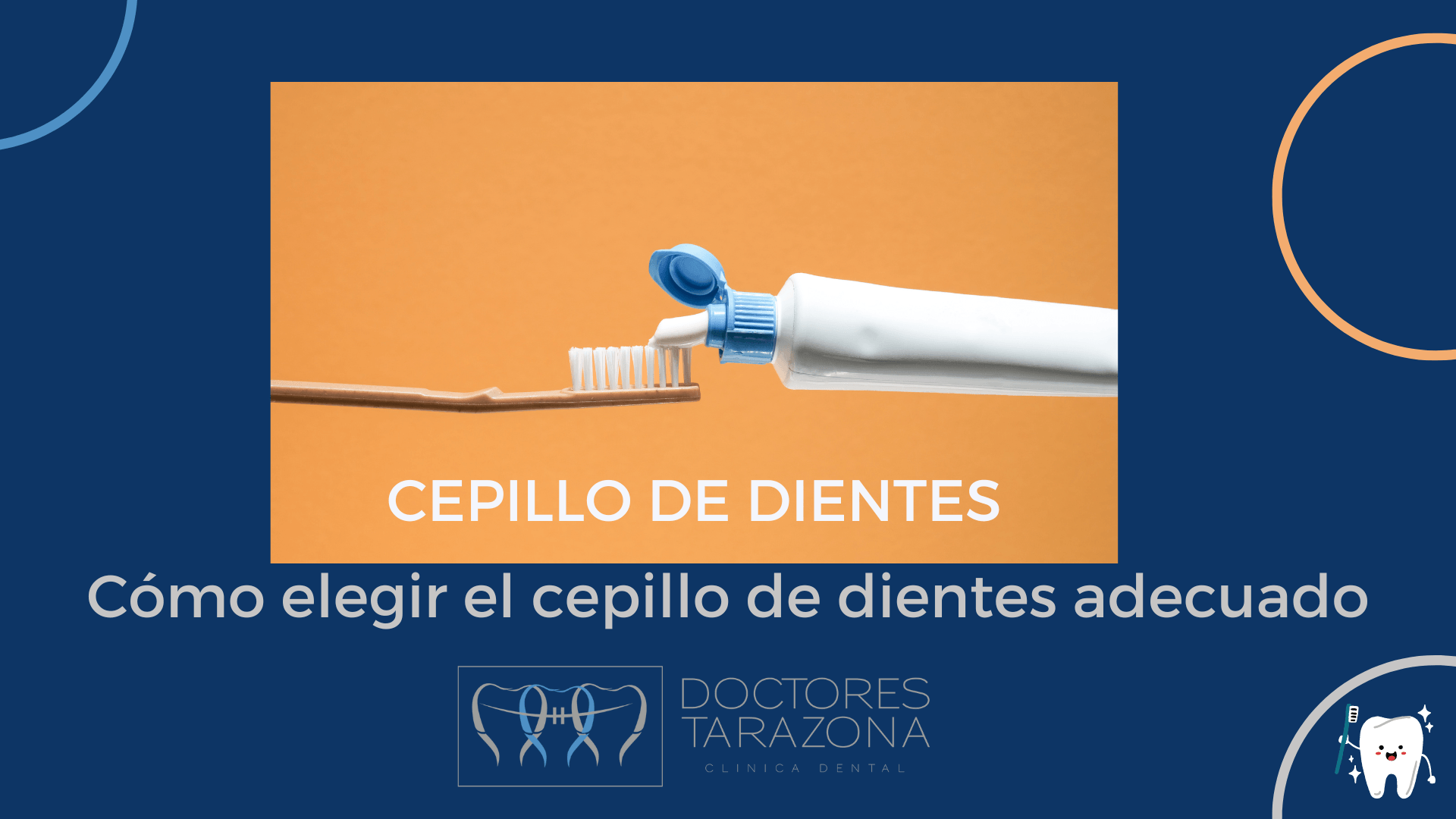
How to Choose the Right Toothbrush
Did you know that the toothbrush is one of the most important elements for maintaining good oral health? However, many people don’t give it the importance it deserves and use the first brush they find in the supermarket, without taking into account its features or their needs. This can cause problems such as cavities, gingivitis, dental sensitivity or wear of the enamel. That’s why, in this post, we’re going to teach you how to choose the right toothbrush for your mouth, according to several criteria such as the size, the shape, the firmness, the material or the type of brush. In addition, we’re going to tell you the story of Ana, a patient of our Clínica Dental Doctores Tarazona in Valencia, who changed her toothbrush for a more suitable one and noticed the difference.
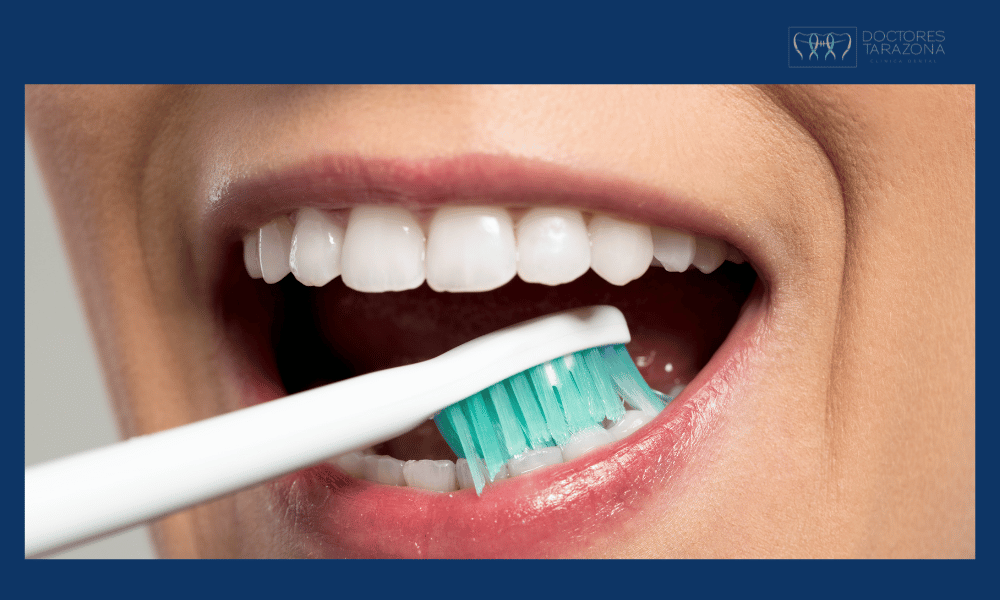
How to tell if you’re using the right toothbrush for your mouth?
To tell whether you’re using the right toothbrush for your mouth, you should pay attention to several aspects:
- The size of the head should be proportional to the size of your mouth and let you access all the areas of your teeth and gums without difficulty. The ideal is for the head to be between 2 and 3 cm long and between 1 and 1.5 cm wide.
- The shape of the head should be rounded or oval to avoid damaging the gums or the cheeks. You can also opt for a diamond-shaped or triangular head if you find it more comfortable.
- The firmness of the bristles should be soft or medium, never hard, as it can irritate the gums or wear away the enamel. The bristles should be well distributed and aligned, with no protrusions or irregularities.
- The material of the bristles should be synthetic, such as nylon or polyester, as they’re more hygienic and durable than natural ones, such as animal hair. In addition, they should have rounded tips so as not to damage the soft tissues.
- The type of brush can be manual or electric, according to your preference and your budget. Manual brushes are cheaper and easier to use, but they require a good brushing technique to be effective. Electric brushes are more expensive and need a battery or batteries, but they offer a greater clean and removal of plaque thanks to their rotating or vibrating movements.
>>> This post may interest you: The risks of not treating gum disease.
Manual vs. electric toothbrushes: which is the best option for you?
One of the main doubts that arise when choosing the right toothbrush is whether to opt for a manual or an electric brush. Both have their advantages and disadvantages, and the choice will depend on your tastes, needs and possibilities. Here we explain the differences between the two types of brush:
- Manual brushes are the most traditional and the most used. They’re cheaper and easier to find in any shop or pharmacy. They don’t need a battery or batteries, so they’re more eco-friendly and don’t depend on a power source. They’re lighter and more portable, which makes them ideal for travelling or carrying in your bag or rucksack. However, manual brushes require a good brushing technique to be effective and remove plaque. In addition, they can cause injuries to the gums or the enamel if they’re used with too much force or at an incorrect angle. They can also cause muscle fatigue in the hand or the wrist if they’re used for a long time.
- Electric brushes are the most modern and the most recommended by dentists. They’re more expensive and harder to find than manual ones, and they need a battery or batteries to work, which involves greater expense and a greater environmental impact. They’re heavier and bulkier, which makes them less comfortable to transport or store. However, electric brushes offer a greater clean and removal of plaque than manual ones, thanks to their rotating or vibrating movements that reach all the areas of the mouth. In addition, they’re easier to use and require less effort and brushing time. They also have additional functions such as a timer, a pressure sensor or a charge indicator that help to improve oral hygiene.

Different types of toothbrush bristles and how to choose the right one
Another important aspect when choosing the right toothbrush is the type of bristles it has. The bristles are the fibres that come out of the head of the brush and that come into contact with the teeth and the gums. There are different types of bristles according to their firmness, their material and their shape. Here we explain the characteristics of each type of bristle and how to choose the right one for you:
- The firmness of the bristles refers to the rigidity or flexibility they have. According to this criterion, we can distinguish between soft, medium or hard bristles. Soft bristles are the most recommended by dentists, as they’re the gentlest with the gums and the enamel, and the most suitable for people with dental sensitivity, gingivitis or periodontal disease. Medium bristles are the most common and the most used by the majority of the population. They’re the most balanced between cleaning and protection, and the most suitable for people with good oral health. Hard bristles are the least recommended by dentists, as they’re the most aggressive with the gums and the enamel, and the most prone to causing injuries or dental wear. They’re only recommended for people with very strong and resistant teeth, or for specific cases such as tartar or very stuck plaque.
- The material of the bristles refers to the origin or the composition of the fibres. According to this criterion, we can distinguish between natural or synthetic bristles. Natural bristles are those that come from animal sources, such as boar or horse hair. They’re very rare and aren’t recommended for hygienic and ethical reasons. Synthetic bristles are those that come from artificial sources, such as nylon or polyester. They’re the most common and the most recommended by dentists, as they’re more hygienic and durable than natural ones. In addition, they have rounded tips so as not to damage the soft tissues.
- The shape of the bristles refers to the design or the arrangement of the fibres in the head of the brush. According to this criterion, we can distinguish between straight, angled, wavy or crossed bristles. Straight bristles are the simplest and the most traditional. They have all the fibres aligned in the same direction and height, which makes horizontal brushing easier. However, they can leave areas uncleaned or be too rigid to adapt to the shape of the teeth. Angled bristles are the most common and the most used by the majority of the population. They have some fibres angled to one side or the other, which allows better access to the interdental spaces and to the gum line. They’re the most balanced between cleaning and protection, and the most suitable for people with good oral health. Wavy bristles are the most modern and the most innovative. They have some fibres with a curved or wavy shape, which allows them to adapt better to the shape of the teeth and gently massage the gums. They’re the gentlest with the soft tissues, and the most suitable for people with dental sensitivity, gingivitis or periodontal disease. Crossed bristles are the least frequent and the least known. They have some fibres that cross each other, forming a kind of X or V. This allows the teeth to be cleaned more deeply and more plaque to be removed. However, they can be too aggressive with the gums or the enamel and are only recommended for specific cases such as tartar or very stuck plaque.
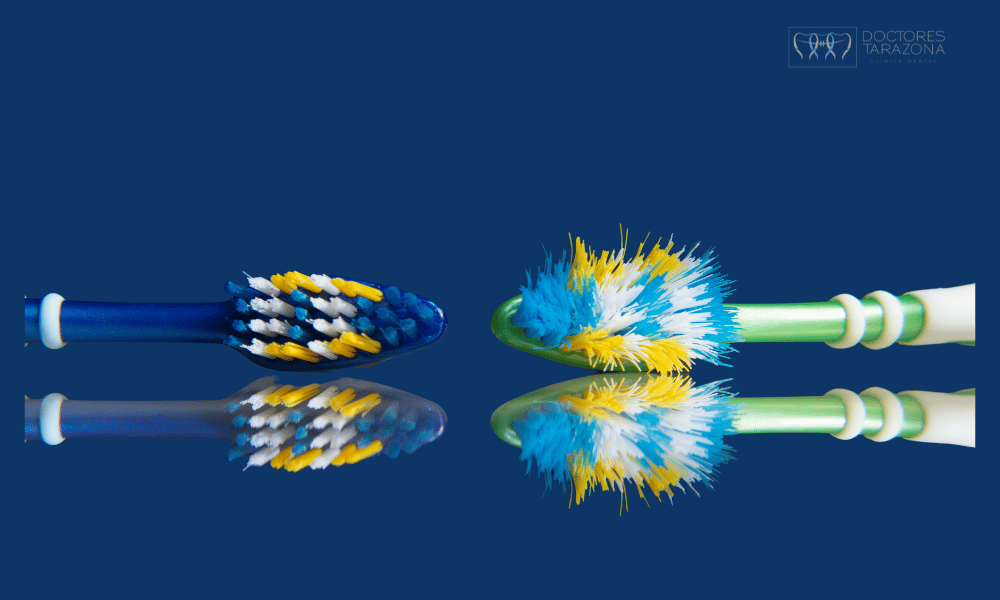
What size of toothbrush should you choose for an optimal clean?
Another important aspect when choosing the right toothbrush is the size of the head. The head is the part of the brush where the bristles are and that comes into contact with the teeth and the gums. The size of the head should be proportional to the size of your mouth and let you access all the areas of your teeth without difficulty.
If the head is too big, it can make brushing the back areas or the smaller teeth, such as the incisors or the canines, difficult. In addition, it can cause discomfort or injuries to the gums or the cheeks if it rubs against them. If the head is too small, it can make brushing the wider areas or the bigger teeth, such as the molars or the premolars, difficult. In addition, it can require more time and effort to clean the whole mouth.
The ideal is for the head to be between 2 and 3 cm long and between 1 and 1.5 cm wide. That way you’ll be able to reach all the areas of your mouth easily and comfortably, without leaving any uncleaned or causing any damage. You can also choose a rounded or oval-shaped head to avoid the sharp or angular edges that can damage the soft tissues.
The factors to consider when choosing the right toothbrush for you
As you’ve seen, there are many aspects to bear in mind when choosing the right toothbrush for your mouth. However, there isn’t a perfect brush that works for everyone, but rather each person should choose the one that best suits their characteristics and needs. That’s why we recommend that you consider the following factors when choosing your toothbrush:
- Your oral health: if you have a dental problem such as cavities, gingivitis, dental sensitivity or periodontal disease, you should choose a soft brush that doesn’t damage your gums or your enamel. You can also opt for an electric brush that offers you a greater clean and removal of plaque. If you have good oral health, you can choose a medium brush that offers you a good clean and protection.
- Your mouth size: if you have a small or narrow mouth, you should choose a brush with a small head that lets you access all the areas of your teeth without difficulty. If you have a big or wide mouth, you can choose a brush with a big head that lets you clean all the areas of your mouth with fewer strokes.
- Your budget: if you have a limited budget or don’t want to spend a lot of money on your toothbrush, you can choose a manual brush that’s affordable and easy to find in any shop or pharmacy. If you have a bigger budget or want to invest in your oral health, you can choose an electric brush that offers you a greater clean and removal of plaque.
- Your preference: if you like to feel in control of your brushing and use different techniques or movements, you can choose a manual brush that gives you more freedom and flexibility. If you like to feel the comfort and the ease of your brushing and use a single technique or movement, you can choose an electric brush that gives you more practicality and simplicity. Electric brushes are suitable for avoiding damage to the gums or in periodontal patients, with thin gums; it’s advisable to get an electric brush with pressure control so that if more pressure than necessary is applied the brush stops to avoid damaging the gums and thereby preventing them from bleeding.
Ana’s story: how she changed her toothbrush for a more suitable one.
Ana is a patient of our Clínica Dental Doctores Tarazona in Valencia who came to us a few months ago with a problem: she had inflamed and bleeding gums and felt pain when eating cold or hot foods. We did a dental check-up and diagnosed gingivitis and dental sensitivity.
We asked her about her oral hygiene habits and she told us that she brushed her teeth three times a day with a hard brush that she’d bought on offer. We explained that this was the reason for her problems: by using a hard brush she was damaging her gums and her enamel, which was causing inflammation, bleeding and sensitivity.
We recommended that she change her brush for a more suitable one: a soft brush with a small, rounded head, with synthetic bristles and rounded tips. We taught her how to use it properly, making soft, circular movements, without pressing too hard and without forgetting any area. We also advised her to use a specific toothpaste for sensitivity and an antiseptic mouthwash to prevent gingivitis.
Ana followed our advice and came back to visit us a few weeks later. We were glad to see that her gums had improved noticeably: they were no longer inflamed or bleeding, and her sensitivity had decreased. Ana told us that she felt much better and that she was very happy with her new toothbrush and grateful for the recommendations and the care she’d received at the practice.
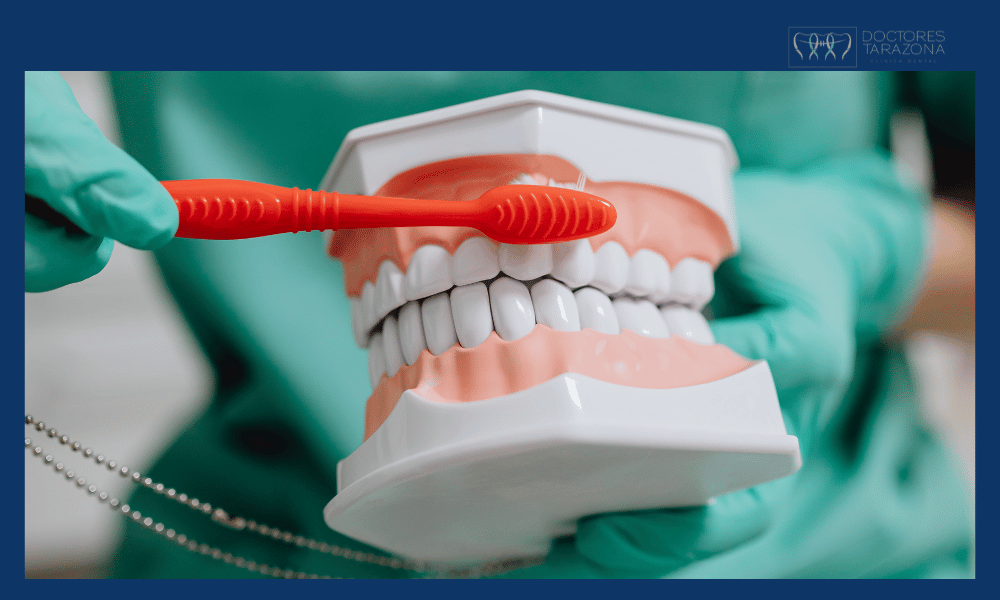
Want to know more about how to choose the right toothbrush?
If you liked this post and want to know more about how to choose the right toothbrush for your mouth, we invite you to visit our Clínica Dental Doctores Tarazona in Valencia. We’re experts in oral health and we offer you personalised and professional care. We’ll do a free dental check-up and advise you on the best toothbrush for you, according to your characteristics and needs.
In addition, we offer you a wide range of dental services, such as implants, orthodontics, cosmetic dentistry, endodontics, periodontics, paediatric dentistry and more. We have a team of qualified and experienced dentists, and the latest technologies and quality materials. Our goal is for you to have a healthy and beautiful smile.
Don’t hesitate any longer and book your appointment today. Call us on 96 340 06 34 or write to us at info@clinicadentaldoctorestarazona.com . We’ll be delighted to look after you and resolve all your doubts. Remember that your oral health is very important and that the toothbrush is your best ally. We’re waiting for you!
At Clínica Dental Doctores Tarazona:
“We Love Looking After Your Smile”