El impacto de la dieta en la salud dental: Consejos de la Clínica Dental Doctores Tarazona en Valencia
Diet is a key factor in maintaining good general health and also good dental health. What we eat and drink directly influences the state of our teeth and gums, as well as our smile. That’s why it’s important to follow a balanced and varied diet that provides all the nutrients needed to strengthen our mouth and prevent dental problems, so take note of this post about diet and dental health.
In this post, we tell you how diet influences dental health and what foods you should include or avoid to look after your mouth. In addition, we share with you some real stories of patients who have come to our clinic in Valencia to receive dental treatment and improve their diet.
Foods that strengthen your teeth:
Which ones should you include in your diet?
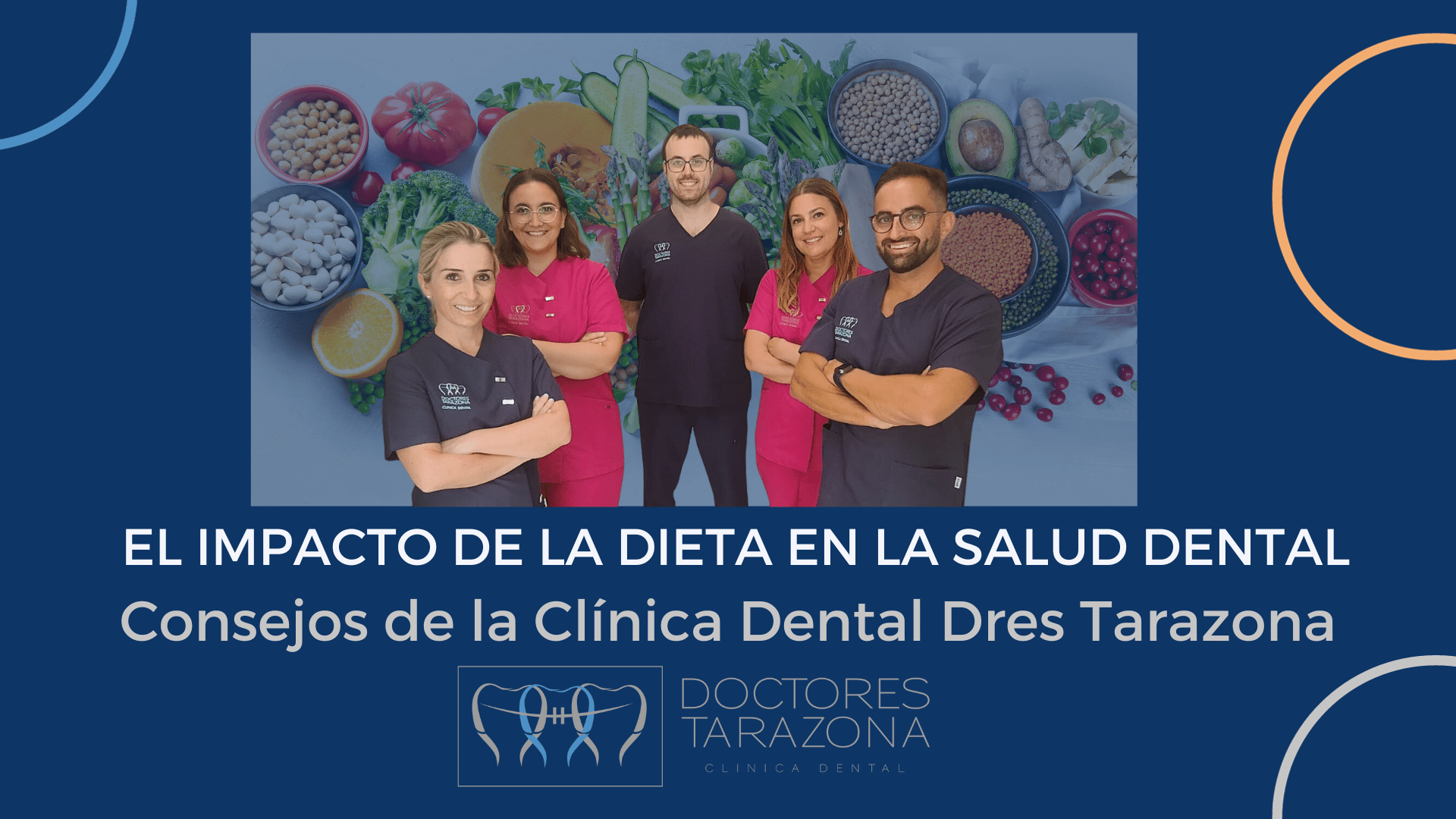
To have strong and healthy teeth, it’s essential to eat foods that contain calcium, phosphorus, magnesium and vitamin D, as they’re the main components of the tooth enamel, the protective layer that covers the teeth. Some examples of foods rich in these nutrients are:
- Dairy products: milk, cheese, yoghurt, etc.
- Oily fish: salmon, sardines, tuna, etc.
- Nuts: almonds, walnuts, pistachios, etc.
- Green leafy vegetables: spinach, chard, broccoli, etc.
- Eggs: especially the yolk.
These foods help to remineralise the tooth enamel and to prevent its wear by acids or bacteria. In addition, some of them have a cleaning effect on the teeth, such as cheese or almonds, which remove food debris and stimulate the production of saliva.
A case of a patient who has improved her dental health thanks to these foods is María, a 35-year-old woman who came to our clinic with several sensitive and worn teeth. At her first visit we carried out a complete check-up completely free of charge and recommended a diet rich in calcium and vitamin D, as well as a fluoride treatment to reinforce her enamel. After a few weeks following our instructions, María noticed a great improvement in her dental sensitivity and in her aesthetic appearance.
>>> This post may interest you: “Dental Sensitivity“
The role of sugars and carbohydrates in the formation of cavities
Sugars and carbohydrates are the main culprits in the formation of cavities, as they’re the favourite food of the bacteria that live in our mouth. These bacteria stick to the teeth, forming a biofilm called dental plaque, which produces acids that attack the tooth enamel and cause its demineralisation.
The most harmful foods for our dental health are those that contain added or refined sugars, such as sweets, fizzy drinks, industrial juices or biscuits. Foods that contain starches, such as bread, potatoes, rice or pasta, are also harmful, as they turn into sugars in the mouth. These foods should be eaten in moderation and preferably during meals, not between them.
In addition, you have to bear in mind the consistency and the stickiness of the foods, as those that are soft or sticky stay in contact with the teeth for longer and favour the formation of cavities. For example, sweets, candies, cereals or dried fruit.
An example of a patient who has suffered the consequences of a diet rich in sugars and carbohydrates is Pedro, an 8-year-old boy who came to our clinic with several cavities in his milk and permanent teeth. We took an X-ray and detected several interproximal cavity lesions, that is, between the teeth. We explained to him and his mother that he should reduce the consumption of sugars and carbohydrates, especially between meals, and improve his dental hygiene. We did several fillings to restore his affected teeth and taught him to use the brush and dental floss properly.
>>> You may be interested in learning more about: “Cavities: Everything you didn’t know.“
Diet and periodontal health:
How to prevent gum diseases through diet?
Diet also influences the health of our gums, which are the tissue that surrounds and holds the teeth in place. A poor diet can weaken our immune system and make our gums more vulnerable to infections from the bacteria in dental plaque.
The most common gum diseases are gingivitis and periodontitis. Gingivitis is an inflammation of the gums that shows up as bleeding, redness and sensitivity when brushing or eating. Periodontitis is a more serious infection that affects the bone and the ligament that hold the teeth in place, causing their mobility and their loss.
To prevent these gum diseases, it’s important to eat foods that are good for the teeth and that contain vitamin C, vitamin A, vitamin E and omega-3 fatty acids, as they have anti-inflammatory, antioxidant and immunomodulatory properties. Some examples of foods rich in these nutrients are:
- Citrus fruits: oranges, lemons, grapefruits, etc.
- Red berries: strawberries, raspberries, blueberries, etc.
- Carrots: raw or cooked.
- Olive oil: extra virgin and uncooked.
- Oily fish: salmon, sardines, tuna, etc.
- Seeds: chia, flax, sesame, etc.
These foods that are good for the teeth help to strengthen our defences and to protect our gums from external aggressions. In addition, some of them have a cleaning effect on the teeth and the gums, such as citrus fruits or carrots.
An example of a patient who has improved her periodontal health thanks to these foods is Ana, a 45-year-old woman who came to our clinic with inflamed and bleeding gums. We carried out a clinical examination and diagnosed chronic gingivitis. We recommended a diet rich in vitamin C and omega-3, as well as a scaling and root planing treatment to remove the subgingival tartar. After a few weeks following our instructions, Ana noticed a great improvement in her gum inflammation and bleeding.
- The information in this post may help you: Infected tooth, is this your case?
Drinks and their impact on dental health: which ones should you avoid and which ones are safe?
The drinks we consume also have an impact on our dental health, as they can contain substances that damage our teeth or our gums. Some drinks we should avoid or limit because of their negative effect on our mouth are:
- Fizzy drinks: they contain added sugars and acids that erode the tooth enamel and favour the formation of cavities.
- Industrial juices: they also contain added sugars and acids that damage the tooth enamel and increase the risk of cavities.
- Alcoholic drinks: they dehydrate the mouth, reduce the production of saliva and alter the balance of the oral pH, which favours the growth of bacteria and fungi.
- Coffee, tea or red wine: they can stain the tooth enamel and cause a loss of brightness and colour in the teeth.
On the contrary, some drinks that are safe or beneficial for our dental health are:
- Water: it hydrates the mouth, neutralises the acids, removes the bacteria and helps to prevent bad breath.
- Milk: it provides calcium for the teeth, phosphorus and vitamin D, which are essential to strengthen the tooth enamel and prevent cavities.
- Green tea: it has antioxidant, anti-inflammatory and antibacterial properties, which help to protect the gums and to prevent dental plaque.
- Natural fruit or vegetable juice: it provides vitamins, minerals and fibre, which are beneficial for general and dental health. That said, you have to consume them in moderation and preferably with a straw, to avoid direct contact with the teeth.
An example of a patient who has changed his drinking habits for the sake of his dental health is Luis, a 40-year-old man who came to our clinic with dark stains on his front teeth. We carried out an evaluation and explained that those stains were due to the excessive consumption of coffee and red wine, which had stained his tooth enamel. We recommended that he reduce the consumption of these drinks and replace them with water or green tea. We also did a teeth whitening to remove the stains and improve his aesthetics.
Essential nutrients for your diet and dental health: vitamins and minerals you should include in your diet
In addition to the nutrients we’ve mentioned above, there are other vitamins to strengthen the teeth and minerals that are essential for dental health and that we should include in our diet. These nutrients contribute to the development, the maintenance and the repair of the oral tissues, as well as to the prevention of dental diseases.
Some examples of essential nutrients for dental health are:
- Vitamin A: it’s involved in the formation of the tooth enamel, the oral mucosa and the saliva. It’s found in foods such as liver, eggs, carrot or mango.
- Vitamin B: it takes part in cell metabolism, in the healing of wounds and in the prevention of oral infections. It’s found in foods such as meats, wholegrain cereals, pulses or nuts.
- Vitamin C: it has antioxidant, anti-inflammatory and immunomodulatory properties, which help to protect the gums and to prevent gum bleeding. It’s found in foods such as citrus fruits, red berries, kiwi or pepper.
- Vitamin E: it has antioxidant, anti-inflammatory and healing properties, which help to protect the gums and to prevent periodontitis. It’s found in foods such as olive oil, seeds, nuts or avocado.
- Iron: it’s involved in the formation of red blood cells, in the transport of oxygen and in the prevention of anaemia, which can affect oral health. It’s found in foods such as red meats, seafood, spinach or lentils.
- Zinc: it takes part in the synthesis of proteins, in the repair of tissues and in the prevention of oral infections. It’s found in foods such as oysters, lamb, cheese or chocolate.
These nutrients are essential to maintain good dental and general health, so we must make sure we consume them in sufficient and adequate amounts.
A case of a patient who has improved her dental health thanks to these nutrients is Laura, a 30-year-old woman who came to our clinic with pale and bleeding gums. She was advised to have a blood test and afterwards the results of her analysis showed that she had iron-deficiency anaemia. We explained that this anaemia could affect her oral health and her quality of life. We recommended a diet rich in iron and vitamin C, as well as an oral iron supplement. We also carried out a curettage treatment to remove the subgingival tartar and improve her periodontal health.
We hope this post has helped you learn how diet influences dental health and what foods you should include or avoid to look after your mouth. If you have any doubt or need an appointment, don’t hesitate to contact us. At the Clínica Dental Doctores Tarazona in Valencia, we offer you personalised and professional care, tailored to your needs and to those of your smile.
We’re waiting for you! 😊
At Clínica Dental Doctores Tarazona:
“We Love Looking After Your Smile”