Root Canal – Dental Health and Effective Treatment

Does a tooth hurt a lot? Or have you been told you need a root canal and you’ve got scared? Have you heard horror stories about this dental treatment and found yourself full of doubts? Are you worried about the pain, the time, the recovery and the result of the root canal? If so, this post is for you.
In this post, we’re going to explain the importance of the root canal in maintaining good dental health. Let us tell you a story that will help you understand why this treatment is so important.
A few months ago, our patient Juan started to experience an intense toothache. No matter what he tried, the pain persisted and made it hard for him to eat, talk and even sleep. Juan knew he urgently needed dental care, so he came to our recommended dentist.
After a thorough assessment, Dr José Pérez diagnosed that Juan had a problem in the root canal of his tooth. The dentist explained that root canal treatment, also known as endodontics, was the best solution to relieve the pain and save his tooth.
With a little fear, but determined to get rid of the pain once and for all, Juan booked an appointment with our doctor, who is a specialist endodontist. During the procedure, the endodontist used advanced techniques and state-of-the-art equipment from Clínica Doctores Tarazona to remove the infection and clean the root canal of Juan’s tooth.
After the root canal treatment, Juan experienced immediate relief. The toothache that had been torturing him for weeks finally disappeared. He was happy to have made the decision to come to our clinic and seek proper dental treatment.
Now, Juan follows a regular dental care routine, which includes periodic visits to the dentist and good oral hygiene at home. He’s learned how important it is to avoid dental problems and how a root canal can make a big difference in preserving his dental health.
In the following sections, we’ll go deeper into the details of the root canal and how it can help to relieve toothache effectively. We’ll also discuss the importance of going to a specialist endodontist and how regular dental care can prevent the need for this treatment. Keep reading to discover more about the root canal and its impact on dental health!
Summary of the key points:
- The root canal is an effective dental treatment to relieve toothache.
- Root canal treatment is an essential part of endodontics.
- Going to a specialist endodontist guarantees successful results.
- Regular dental care can prevent root canal problems and toothache.
- Clínica Dental Doctores Tarazona has a team of experts in endodontics and personalised dental care.
>>> This post may interest you: The importance of having a regular dental check-up.
Root canal – An expert dental treatment to relieve toothache
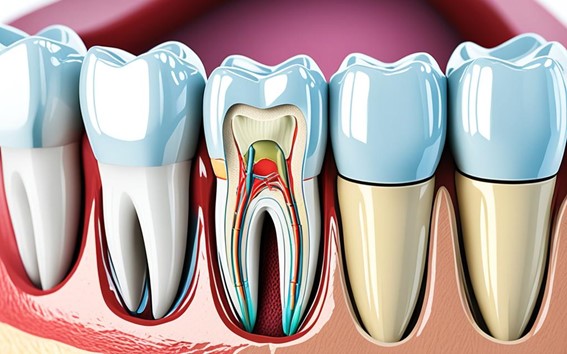
In this section, we’ll focus on how the root canal can relieve toothache effectively. We’ll explain what root canal treatment consists of and how an expert endodontist can carry out this procedure safely and without pain. We’ll discuss the steps involved in the root canal and why it’s important to seek expert dental treatment to guarantee successful results.
A root canal is a dental procedure that’s used to treat and save seriously damaged or infected teeth. When the soft tissue inside a tooth, known as the pulp, becomes inflamed or infected, it can cause an intense toothache and potentially damage the tooth. The root canal allows the inflamed or infected pulp to be removed, and the root canal to be cleaned, disinfected and sealed to prevent future infections.
The root canal treatment, which is the main procedure of endodontics, is carried out using advanced techniques and specialised equipment. An expert endodontist has the knowledge and experience needed to carry out this procedure precisely and effectively. During the treatment, local anaesthetic will be applied to guarantee that the patient is comfortable and free of pain.
The steps involved in a root canal can vary depending on the specific case, but they generally include the following:
- Examining and diagnosing the dental problem through X-rays and clinical evaluations.
- Administering local anaesthetic to guarantee the patient’s comfort during the procedure.
- Accessing the inside of the tooth by drilling through the tooth enamel.
- Removing the inflamed or infected pulp and cleaning and disinfecting the root canal.
- Filling the root canal with a specialised filling material to prevent future infections.
- Restoring the tooth with a crown or a filling to protect it and return its natural function and appearance.
It’s important to seek expert dental treatment when a root canal is needed. An endodontist has the knowledge and specialised training needed to carry out the procedure safely and effectively. In addition, an endodontist can offer advanced options of pain relief or sedation for those patients who may have dental anxiety.
In addition to the root canal treatment itself, it’s vital to maintain a good regular dental care routine to prevent future root canal problems and toothache. This includes brushing your teeth twice a day, using dental floss daily and visiting the dentist regularly for check-ups and professional cleanings.
| Benefits of the root canal | Regular dental care |
| Relieves intense toothache | Keeps the teeth and gums healthy |
| Saves the teeth from extraction | Prevents cavities and periodontal disease |
| Restores the natural function and appearance of the tooth | Identifies early dental problems |
In short, the root canal is an expert dental treatment that can relieve toothache and guarantee the health of your smile. Seeking a specialist endodontist and maintaining regular dental care are crucial to getting successful results and preventing future problems. If you need a root canal treatment, we recommend visiting our clinic, where you’ll find a team of experts in endodontics and personalised dental care.
Root canal vs. tooth extraction: differences, benefits and the cases in which each option is recommended
Many people wonder whether it’s better to have a root canal or to extract the tooth. The answer is that it depends on each case, but in general, whenever possible, it’s recommended to keep the natural tooth with a root canal, as it has many benefits compared to extraction.
The benefits of the root canal are:
– It preserves the structure and the function of the tooth, avoiding movements, misalignments or alterations in the bite.
– It maintains the aesthetics and the harmony of the smile, avoiding empty spaces or darkened teeth.
– It avoids the loss of bone and gum that occurs when a tooth is extracted, which can affect facial health and appearance.
– It avoids the need to fit a denture, which can be more expensive, uncomfortable or require more care than the natural tooth.
Tooth extraction is only recommended when the tooth is so damaged or infected that it can’t be saved with a root canal, or when there are other reasons that justify it, such as, for example, the lack of space, the poor position or the incomplete eruption. In these cases, the extracted tooth must be replaced with a suitable denture, such as an implant, a bridge or false teeth, to avoid the negative consequences of tooth loss.
Common myths about root canal recovery: what to expect after the treatment
Another aspect that creates many doubts about the root canal is the recovery. Some people believe that recovery from a root canal is very long, painful or complicated, but this isn’t true. Recovery from a root canal is usually quick and simple, as long as the dentist’s instructions are followed and good oral hygiene is maintained.
After the root canal, you can expect the following aspects:
– Sensitivity or inflammation: it’s normal for the tooth and the treated area to be sensitive or inflamed for a few days, but this can be relieved with painkillers and anti-inflammatories prescribed by the dentist. You can also apply cold locally to reduce the swelling.
– Diet: it’s recommended to avoid eating hard, sticky or very hot or cold foods during the first few hours or days after the root canal, so as not to damage the tooth or cause discomfort. You should opt for soft, lukewarm and nutritious foods, and chew on the opposite side to the treated tooth.
– Hygiene: you should maintain good oral hygiene, brushing the teeth gently and using dental floss and mouthwash. You should avoid the use of toothpicks, which can damage the tooth or the gum.
– Check-ups: you should attend the check-ups scheduled by the dentist, to make sure the tooth is well sealed and restored, and that there are no signs of infection or complication. A periodic X-ray should also be taken to assess the state of the tooth and the bone.
By following this advice, recovery from the root canal will be easy and successful, and you’ll be able to enjoy your healthy and functional tooth for a long time.
Keeping your natural teeth: how this dental treatment can preserve your smile and avoid the need for dentures
To finish, we want to highlight the importance of keeping your natural teeth, and how the root canal can help you achieve this. Natural teeth are irreplaceable, and they have many advantages over artificial dentures. Natural teeth let you chew, talk and smile naturally and comfortably, and they give you a younger and healthier appearance. In addition, natural teeth are stronger and more durable than dentures, and they require less care and maintenance.
The root canal is the treatment that lets you keep your natural teeth when they’re affected by an infection or severe damage. Thanks to the root canal, you can avoid the extraction of the tooth and the fitting of a denture, which can be more expensive, uncomfortable or unstable. The root canal lets you keep your smile intact and avoid the negative consequences of tooth loss, such as the deterioration of the bone, the gum, the bite and the aesthetics.
Conclusion
In short, the root canal is an expert dental treatment that can effectively relieve toothache and guarantee the health of your smile. We’ve explored the basic concepts of this procedure, such as the root canal treatment carried out by a specialist endodontist.
It’s important to remember that regular dental care can prevent the need for a root canal. Keeping good oral hygiene, visiting the dentist periodically and treating any dental problem in time can help to prevent the appearance of toothache and other problems related to the root canal.
If you need a root canal treatment, we recommend that you visit us. At Clínica Dental Doctores Tarazona you’ll find a team of experts in endodontics and personalised dental care. Our goal is to provide you with quality treatment and help you maintain optimal dental health.
Common questions from our patients about the root canal:
What is a root canal?
A root canal is a dental treatment that’s used to treat problems inside the teeth, specifically in the area called the root canal. In this procedure, the damaged or infected dental pulp is removed and the root canals are cleaned and sealed to prevent future infections.
How do I know if I need a root canal?
Some symptoms that indicate the need for a root canal include intense pain in a tooth, prolonged sensitivity to heat or cold, swelling in the affected area or the presence of a dental abscess. If you experience any of these symptoms, it’s important to go to an endodontist to assess your case and determine whether you need this treatment.
How much does a root canal cost?
The cost of a root canal can vary depending on several factors, such as the complexity of the case and the geographical location. In addition, it’s important to bear in mind that the price of the root canal may include other related services, such as X-rays and dental restorations. We recommend consulting an endodontist to get an accurate assessment of the cost of your treatment.
Is a root canal painful?
A root canal is carried out under local anaesthetic, which means that the treated area will be numb during the procedure. This helps to minimise any discomfort or pain you may experience. In addition, the advances in techniques and technologies have made the root canal a relatively comfortable and pain-free treatment for most patients.
How long does a root canal treatment take?
The duration of a root canal treatment can vary depending on the complexity of the case. In general, most root canal treatments are completed in one or two visits to the endodontist. However, in more complicated cases, it may be necessary to schedule additional visits.
We trust that, once again, we’ve been able to clear up your doubts about dental health. Don’t hesitate to consult us and book an appointment.
At Clínica Dental Doctores Tarazona:
“We Love Looking After Your Smile”