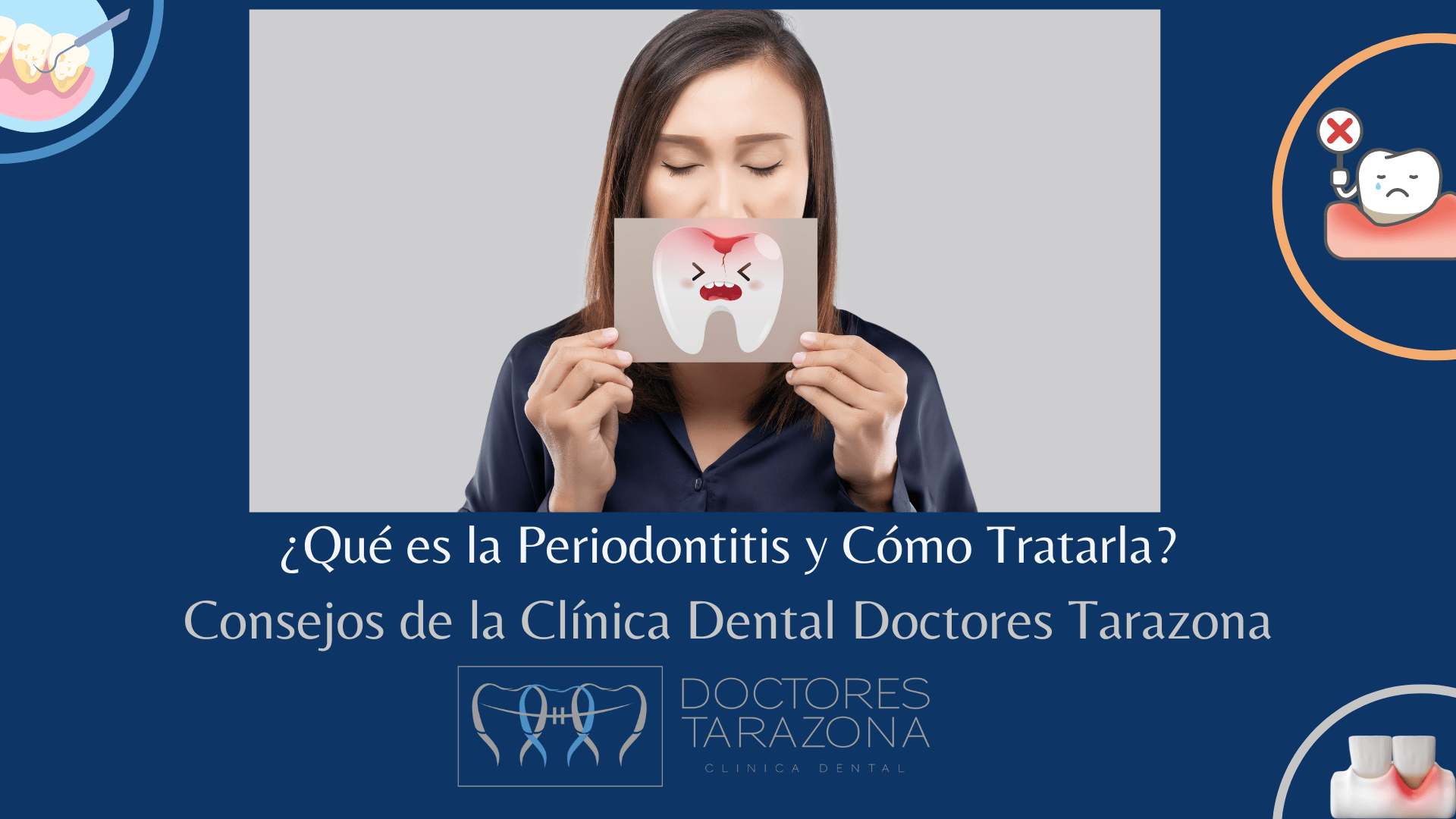
What Is Periodontitis and How to Treat It?
If you want to know what periodontitis is, you’ve come to the right blog! It’s a disease that affects the gums and the bones that hold the teeth in place. It happens when plaque builds up on the surface of the teeth and causes inflammation and infection of the gums. If it isn’t treated in time, periodontitis can cause the loss of the teeth and other complications for general health.
In this post we’re going to explain what periodontitis is, how to identify it, what consequences it has, what treatments exist and how to look after your oral health to prevent and treat it. In addition, we want to tell you the story of one of our patients, who suffered from periodontitis and was able to get his smile back thanks to our help. Keep reading and discover how you can improve your oral health!
What Is Periodontitis?: the silent disease that affects your gums and dental bones
To know what periodontitis is, (as we pointed out in another post) we must explain that it’s a disease that affects the gums and the bones that hold the teeth in place. It happens when there’s a build-up of plaque on the surface of the teeth and it causes inflammation and infection of the gums. Plaque is a sticky, transparent layer that forms constantly on the teeth and that contains bacteria that can damage the gum tissue.
Periodontitis is the most advanced stage of gingivitis, which is the mild inflammation of the gums. If gingivitis isn’t treated, the bacteria can penetrate the gums and reach the alveolar bone, which is the one that holds the teeth in place. This causes the gums to separate from the teeth and periodontal pockets to form, which are spaces between the teeth and the gums where more bacteria and food debris build up.
To explain to you properly what periodontitis is, we must also stress that it’s a silent disease, as it doesn’t usually cause pain or discomfort until it’s very advanced. That’s why it’s important to go to the dentist regularly and be alert to the signs and symptoms that may indicate the presence of this disease.
Signs and symptoms of what periodontitis is: how to identify this periodontal disease
Periodontitis is a disease that can go unnoticed for a long time, but that has some signs and symptoms that can alert us to its existence. Some of them are:
– Red gums, inflamed and sensitive to the touch.
– Bleeding of the gums when brushing the teeth or using dental floss.
– Bad breath or persistent halitosis.
– Receding gums, which makes the teeth look longer.
– Mobility or separation of the teeth.
– Change in the way you bite or in the position of the teeth.
– Appearance of pus between the teeth and the gums.
– Pain or sensitivity when chewing or eating cold or hot foods.
If you notice any of these signs or symptoms, don’t hesitate to go to your dentist as soon as possible. The early diagnosis of periodontitis is key to stopping the disease from advancing and causing irreversible damage to your mouth.
>>> This may interest you: “The dental check-up“
The consequences of not knowing what periodontitis is and it not being treated: why it’s important to act in time
Periodontitis is a serious disease that can have very negative consequences for your oral and general health if it isn’t treated in time. Some of these consequences are:
– Loss of the teeth: periodontitis causes the destruction of the alveolar bone and the periodontal ligament, which are the ones that hold the teeth in place. This makes the teeth move, separate and fall out. The loss of the teeth affects people’s aesthetics, function and self-esteem.
– Infections: periodontitis can cause infections in the mouth and in other parts of the body. The bacteria found in the periodontal pockets can pass into the bloodstream and reach other organs, such as the heart, the lungs or the brain. This can cause diseases such as endocarditis, pneumonia or meningitis.
– Systemic diseases: periodontitis can be related to other diseases that affect the whole body, such as diabetes, cardiovascular diseases, cancer or Alzheimer’s. The inflammation and infection of the gums can alter the immune system and favour the development or worsening of these diseases.
– Problems in pregnancy: periodontitis can affect the health of the mother and the baby during pregnancy. The inflammation and infection of the gums can increase the risk of premature birth, low birth weight or pre-eclampsia.
As you can see, periodontitis isn’t a disease you should take lightly. If you want to avoid these consequences, you must act in time and seek the right treatment for your case.
Treatments available for periodontitis: options to stop and reverse the damage
Periodontitis is a disease that has treatment, as long as it’s diagnosed and treated in time. The goal of the treatment is to remove the plaque and tartar that build up on the teeth and in the periodontal pockets, stop the progression of the disease and regenerate the lost tissue, if possible.
The treatment of periodontitis depends on the degree of advance of the disease and on the characteristics of each patient. Some of the treatment options are:
– Scaling and root planing: it’s a procedure that consists of cleaning the teeth and roots with special instruments, to remove the plaque and tartar that build up on the surface and in the periodontal pockets. It’s done with local anaesthetic and may require several sessions, according to the number and depth of the pockets.
– Periodontal surgery: it’s a procedure that consists of lifting the gums to access the roots and the bone, and clean them with greater precision. It can also be used to reduce the size of the pockets, replace the lost bone or reposition the gums. It’s done with local anaesthetic and may require several days of recovery.
– Antimicrobial therapy: it’s a treatment that consists of applying antibiotics or antiseptics in the mouth, to eliminate or reduce the bacteria that cause periodontitis. It can be used in combination with scaling and root planing or periodontal surgery, or as a maintenance treatment. It can be administered in the form of tablets, mouthwashes, gels or microspheres.
– Regenerative therapy: it’s a treatment that consists of applying biological or synthetic materials in the areas where bone or tissue has been lost, to stimulate their regeneration. It can be used in combination with periodontal surgery, or as an alternative treatment. It can be administered in the form of grafts, membranes, growth factors or stem cells.
These are some of the treatment options that exist for periodontitis, but there are many more that can be adapted to the needs and goals of each patient. The important thing is that you consult your dentist and follow their instructions to get the best results.
Home care for patients with periodontitis: tips and recommendations to improve oral health
The treatment of periodontitis doesn’t end at the dentist’s practice. It’s essential that patients with periodontitis follow some guidelines for care at home, to maintain their oral health and stop the disease from reappearing. Some of these tips are:
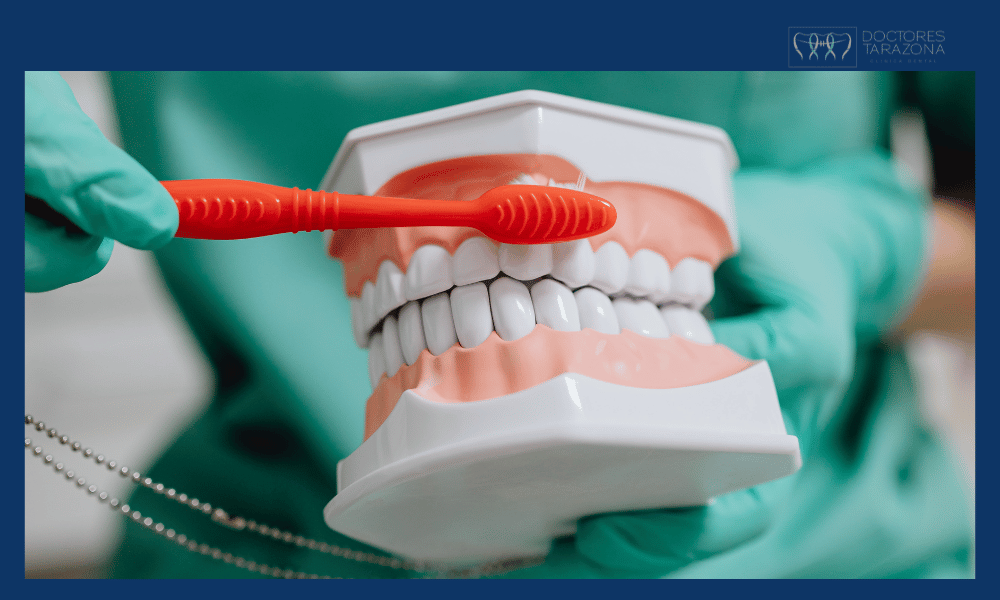
– Brush your teeth at least twice a day, with a proper technique and a soft or electric toothbrush. The brushing should last at least two minutes and cover all the surfaces of the teeth and the gums.
– Use dental floss or interdental brushes at least once a day, to clean the spaces between the teeth and the gums, where more bacteria and food debris build up.
– Use a tongue cleaner or a toothbrush to clean the surface of the tongue, where bacteria that cause bad breath and periodontal diseases can also lodge.
– Use a mouthwash with antiseptic or antibacterial properties, to complement the oral hygiene and reduce the amount of bacteria in the mouth. It should be used after brushing and using dental floss, following the instructions of the dentist or the manufacturer.
– Avoid the consumption of tobacco, alcohol, sugar and acidic or sticky foods, which can favour the formation of plaque, tartar, the inflammation and infection of the gums, and make the healing of wounds difficult.
– Keep a balanced and varied diet, rich in vitamins, minerals and antioxidants, which help to strengthen the immune system and to prevent periodontal diseases.
– Drink enough water, to keep the mouth hydrated and favour the production of saliva, which has a cleaning and protective effect on the teeth and the gums.
– Visit the dentist at least once a year, to have a check-up and a professional cleaning of the teeth and the gums, and detect and treat any problem in time.
These are the main tips you should follow to look after your oral health if you have periodontitis, but there are many more that you can consult with your dentist. Remember that the prevention and treatment of periodontitis largely depend on your cooperation and your commitment to your oral hygiene.
You can find us in Valencia at Avenida Maestro Rodrigo, 54, on our website, on our social media, and by contacting us by phone or WhatsApp.
We’re waiting for you with open arms and always with a big smile. 😁
At Clínica Dental Doctores Tarazona:
“We Love Looking After Your Smile”