The Parts of a Dental Implant: Its Structure and Function
Dental implants have revolutionised the way we replace lost teeth. And if you’re thinking about getting one, or you already have one and you’re simply curious, you’ve surely wondered how a dental implant is made inside. Is it just a screw? What parts does it actually have? Well, we’ll tell you simply and clearly, so you understand it without needing to be a dentist.
What is a dental implant and what is it for?
A dental implant is, basically, an artificial root that’s placed in the jawbone to replace a tooth that’s been lost. It serves as the base for a crown, bridge or full denture. The idea is that it works and looks like a natural tooth, both in aesthetics and in function.
Thanks to them, you can chew normally again, stop other teeth from shifting and maintain the facial structure. And yes, also get your smile back without worrying about whether it shows or not.
The anatomy of a dental implant: the main elements
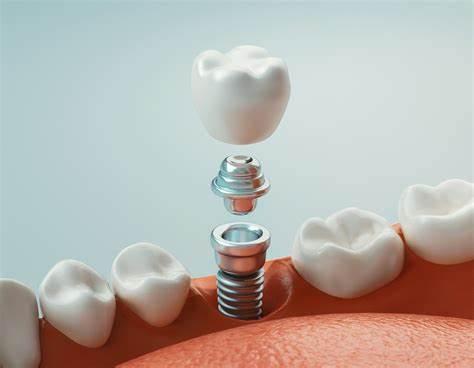
Although at first glance you only see a “tooth”, an implant is made up of three key parts, and each one has a very specific function.
The screw or fixture: the artificial root
This is the part that goes inserted into the bone, as if it were the root of the tooth. It’s normally made of titanium (we’ll talk about materials later) because it’s biocompatible, that is, the body accepts it without rejecting it. This screw isn’t visible, as it’s completely hidden under the gum.
Its job is to anchor firmly to the bone through a process called osseointegration, which is basically when the bone “embraces” the implant.
The abutment: the link between the implant and the crown
It’s also called the “abutment”. It’s a tiny piece, but a key one. It’s screwed to the implant and sticks out of the gum. Its mission is to join the internal part (the screw) with the external one (the crown).
Think of it as the adapter that joins two important pieces. If it doesn’t fit well, the crown won’t be stable, and that can cause discomfort, leaks or even for it to come loose.
The dental crown: the visible part of the tooth
The crown is what you see when you look in the mirror. It’s an aesthetic replica of the original tooth, made to measure. It’s made in the same colour and shape as the rest of your teeth so it looks as natural as possible.
There are different materials, but the most common are porcelain, zirconia or metal-ceramic. The choice depends on the area in the mouth, your habits and the budget, of course.
The most commonly used materials in making implants
Although there are constant advances, the most usual thing is for the implant screw to be made of titanium or titanium alloys, for their durability and compatibility with the body.
There are also zirconia implants, which are white, ideal for patients with metal allergies or who want a more aesthetic solution, although they’re not yet as common as titanium ones.
The crown, for its part, can be:
- Pure porcelain: very aesthetic, but somewhat more fragile.
- Zirconia: strong and very natural.
- Metal-ceramic: a combination of strength and good appearance.
How the parts of a dental implant come together in the mouth
This whole system isn’t placed all at once, but in several phases. First the screw is placed and we wait for the bone to accept it (a few weeks or even months can pass).
Then the abutment is connected, and finally the crown is placed. Each part fits like a puzzle, and if all goes well, the result is a new, firm and fully functional tooth.
The best part is that nobody will notice you have an implant… except you, who’ll be grateful for it every time you eat, talk or smile.
Differences between an implant, a denture and a crown
Sometimes we use these words as if they were the same thing, but they’re not:
- Implant: it’s the screw that replaces the root.
- Crown: it’s the cap that replaces the tooth and is placed on the abutment.
- Denture (prosthesis): it can be fixed or removable, and can replace one, several or all of the teeth. Sometimes it goes on implants, other times on natural teeth.
Understanding these differences will help you communicate better with your dentist and make more informed decisions.
Essential care to extend the life of the implant
Although implants are designed to last many years, even decades, they need care like any other part of your mouth.
- Brush at least twice a day, without forgetting the area around the implant.
- Use interdental brushes or special floss for implants.
- Avoid biting very hard things (no opening bottles with your teeth, please).
- Have regular check-ups to make sure everything is still well fitted.
Frequently asked questions about the parts of a dental implant
Can just the crown be changed if it gets damaged?
Yes, in many cases it’s possible. If the screw and abutment are fine, only the crown is changed without needing to touch the rest of the implant.
Can I have an implant without a crown temporarily?
It’s possible, but not advisable for long. The implant needs to be protected and functional. If you have to wait to fit the final crown, a temporary crown is usually placed.
What happens if the abutment or the crown comes loose?
Don’t be alarmed. It doesn’t mean the implant is failing. Sometimes it’s enough to readjust the piece or re-cement it. That said, it’s important to see the dentist quickly to avoid complications.
Conclusion: knowing the parts of a dental implant helps you look after your oral health better
Knowing how a dental implant works isn’t just interesting, it’s also useful. Understanding each part and its function gives you more confidence during treatment and lets you spot any anomaly. If you’re thinking about getting one, or you already have one, remember that daily care and check-ups are key to making it last many years. And if any doubt comes up, you know we’re here to help. Your smile deserves the best.