Why Do Baby Teeth Fall Out? All About This Natural Process
If you have little ones at home, you’ve surely asked yourself this at some point… why do baby teeth fall out? It seems as curious as it is inevitable, doesn’t it? One day they’re there, and the next your little one turns up with a tooth in their hand and a half-finished smile. But don’t worry, it’s a completely normal process, and today we want to explain it in detail, without jargon, so you know how to support them through this stage with all the peace of mind in the world.
What is the role of baby teeth in children?
Even though they’re “baby” teeth and we know they’re going to fall out, these little teeth have a really important role. They don’t just help the little ones chew and speak correctly; they also mark out the space for the permanent teeth. In other words, they act as “guides” so the permanent teeth come through in the right place when the time comes.
So yes, even though they’re temporary, they deserve all the care in the world.
The tooth-replacement process explained step by step
This change doesn’t happen overnight, far from it. Inside the gum there’s a whole process we don’t see, but it’s the key to that tooth deciding to come loose when the time is right.
What happens inside the gum during the loss
When the permanent tooth starts to grow inside the gum, it gradually pushes the baby tooth. The baby tooth, feeling that pressure, starts to loosen because its root is being reabsorbed. So although from the outside we only see it wobbling, inside there’s a very well-organised job going on.
How the permanent teeth get ready to come through
The permanent teeth wait their turn under the gum, growing little by little until they’re ready to take the place of the baby tooth. When the baby tooth falls out, the new tooth starts to appear. Sometimes it takes a few days, other times a few weeks… every child goes at their own pace, and that’s completely normal.
When do baby teeth fall out: usual ages and signs that the change is coming
Approximate timeline of children’s tooth loss
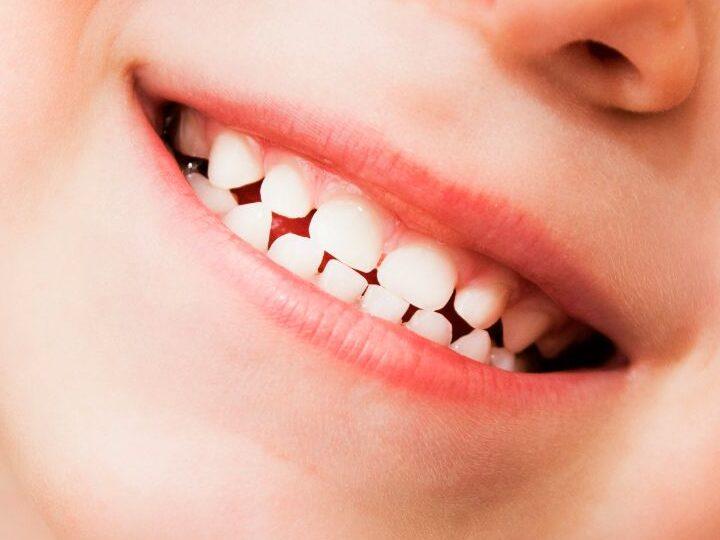
Usually they start to fall out around the age of 5 or 6, beginning with the lower incisors (the two bottom teeth in the centre). From there, the process spreads out until around the age of 12 or 13, when the last baby molars tend to fall out.
But, as we always say, every child is different. Some start earlier and others take a little longer.
Factors that can speed up or delay the loss
Genetics, the rate of growth, or even whether the child lost a tooth to a cavity or a knock, can speed up or delay the tooth replacement. But as long as the process is gradual and there’s no pain or inflammation, it’s not usually a cause for concern.
Is it normal for a baby tooth to take a long time to fall out or to fall out early?
Yes, it’s quite common for some teeth to take longer to loosen or to fall out earlier than expected because of a knock or a cavity. What matters is to make sure the space stays clear for the permanent tooth and, if you have doubts, to check with a dentist who specialises in children so they can assess whether everything’s fine.
Tips to care for children’s mouths during the change of teeth
- Don’t force the tooth out. Let it fall out on its own, or let your little one wiggle it gently if it bothers them.
- Keep up good hygiene, even when the teeth are loose. Brush them carefully, but don’t stop doing it.
- Avoid biting very hard foods with loose teeth to avoid discomfort or damage.
- Make the moment a positive one, even fun, so they experience it without fear.
When to see the children’s dentist: warning signs you shouldn’t ignore
- If you see a permanent tooth coming through behind or in front of the baby tooth without the baby tooth moving.
- If a baby tooth is loose but doesn’t finish falling out after months.
- If you notice inflammation, severe pain or infection in the area.
- If several teeth fall out very early and there doesn’t seem to be a logical order.
In these cases, it’s best to check as soon as possible to avoid problems with spacing or misalignment.
Myths and truths about baby teeth you should know
- “It doesn’t matter if they decay, they’re going to fall out”. False. Cavities in baby teeth can affect the permanent tooth coming through behind.
- “If they fall out very early it’s better”. Not necessarily. Losing them too soon can affect the position of the permanent teeth.
- “If they don’t come through when other children’s do, something’s wrong”. Not always. Every child has their own pace, although if you have doubts, it’s always best to check.
Conclusion: enjoy every tooth that falls out, but don’t neglect their health
Baby teeth are far more important than they seem. Supporting your little one through this process calmly and with good habits will let them enjoy every tooth that falls out (and the Tooth Fairy, of course), while looking after their oral health for the future. And if you need guidance or a check-up, you can count on us — we’ll be delighted to help you through this very special stage. Because every smile, however tiny, deserves to be looked after.